History of St. Bede’s
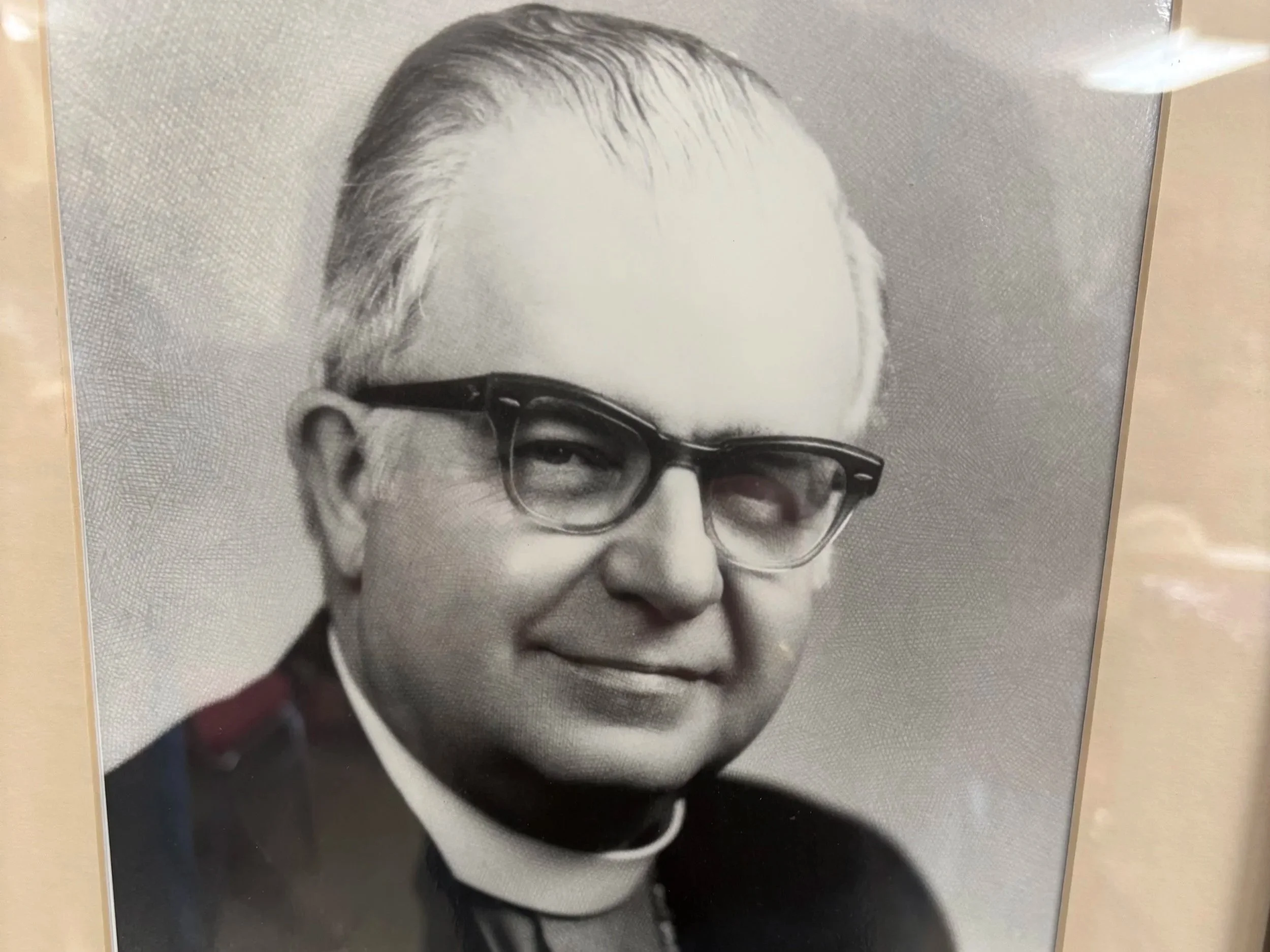
Bishop Frederick W. Putnam who helped dedicate St. Bede’s served as the suffragan bishop (an assistant to the primary Bishop) from 1963-1979.
Sometimes St. Bede’s is referred to as “A Spiritual Oasis in the Woods of Westport.” When people find St. Bede’s, they discover people who love Christ and each other, work together for the life of the church and are committed to extending Jesus’s ministry beyond the church. St. Bede’s is a close church family but new people are always welcomed in arms wide open like our Lord has taught us.
Lake Keystone did not exist prior to 1964 when a massive dam was officially put into commission; for that reason, it is not surprising that there was not a high-speed highway from the Westport area to Tulsa. As late as the fall of 1967, the Keystone Expressway was still on the drawing boards. A number of the Tulsa families who came out to Westport during the summers had difficulty keeping in touch with their church families. Rather than be deprived of the benefits of communion on both social and sacramental levels, these families created St. Bede’s Church. Many involved assumed that the Westport Peninsula (the land between the Arkansas River and the Cimarron River in Pawnee County) would become a booming suburb in a few years. Newspaper articles of the time forecast as many as 37,000 inhabitants and the new church even planned to construct an elementary school on the property at Westport.
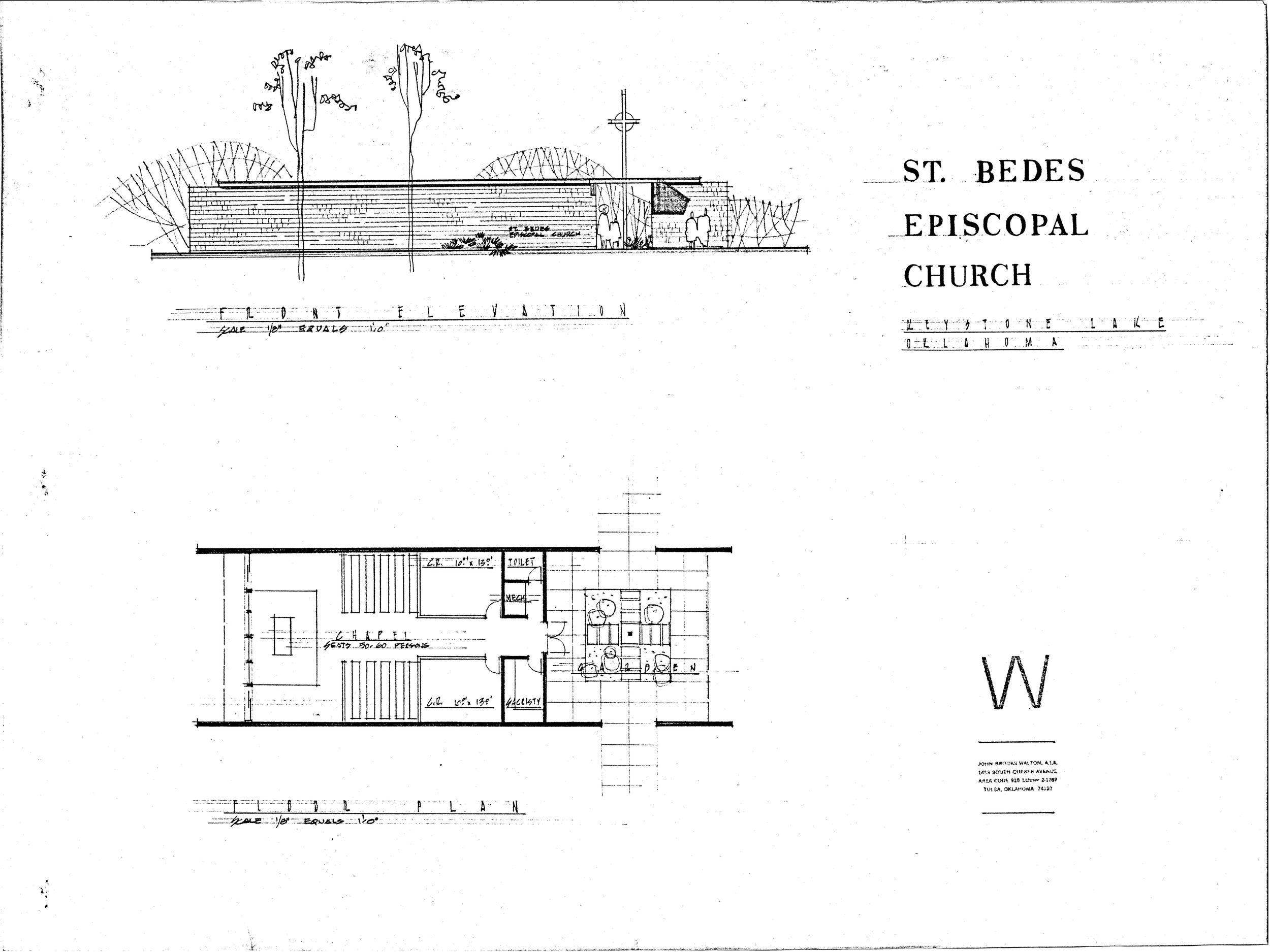
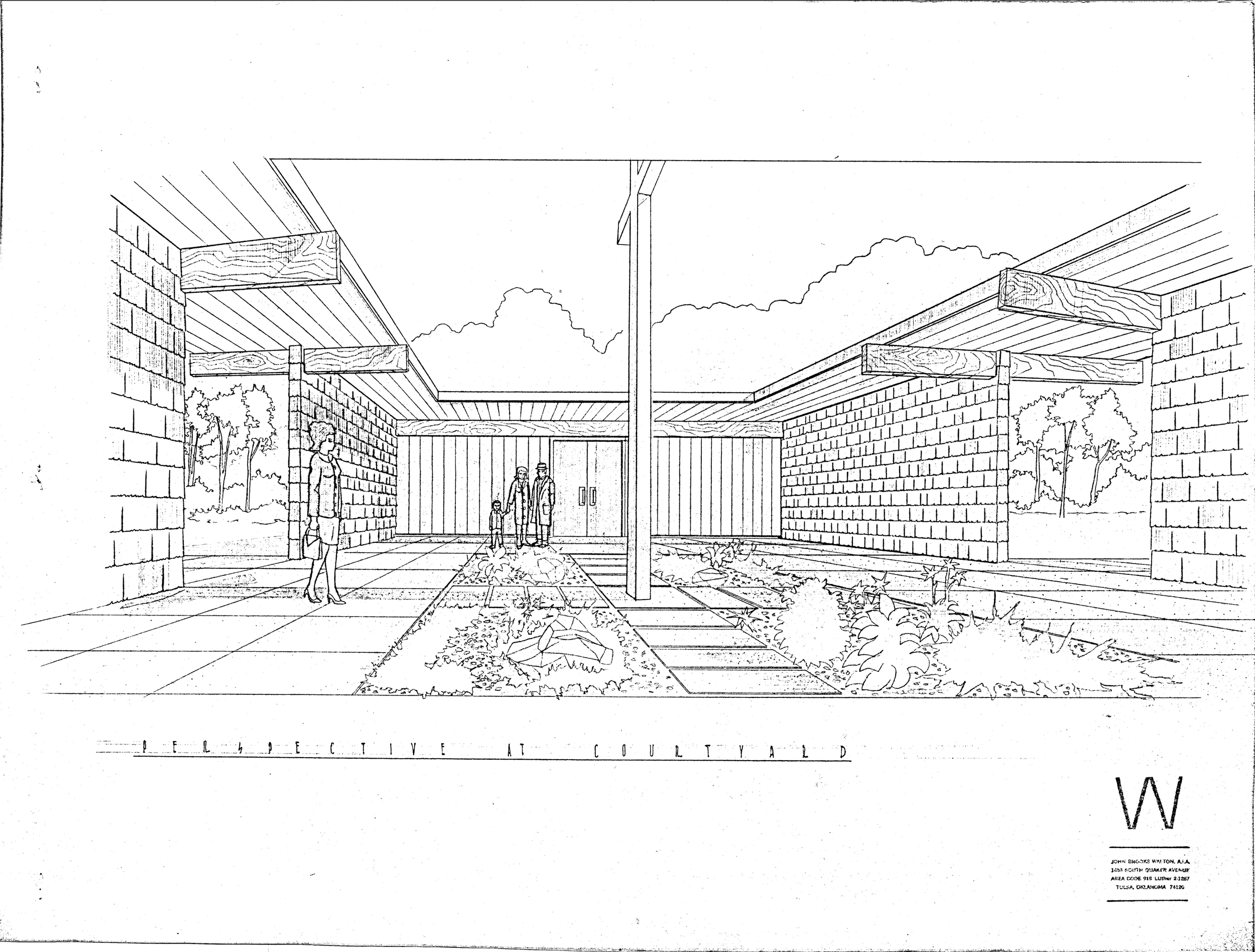
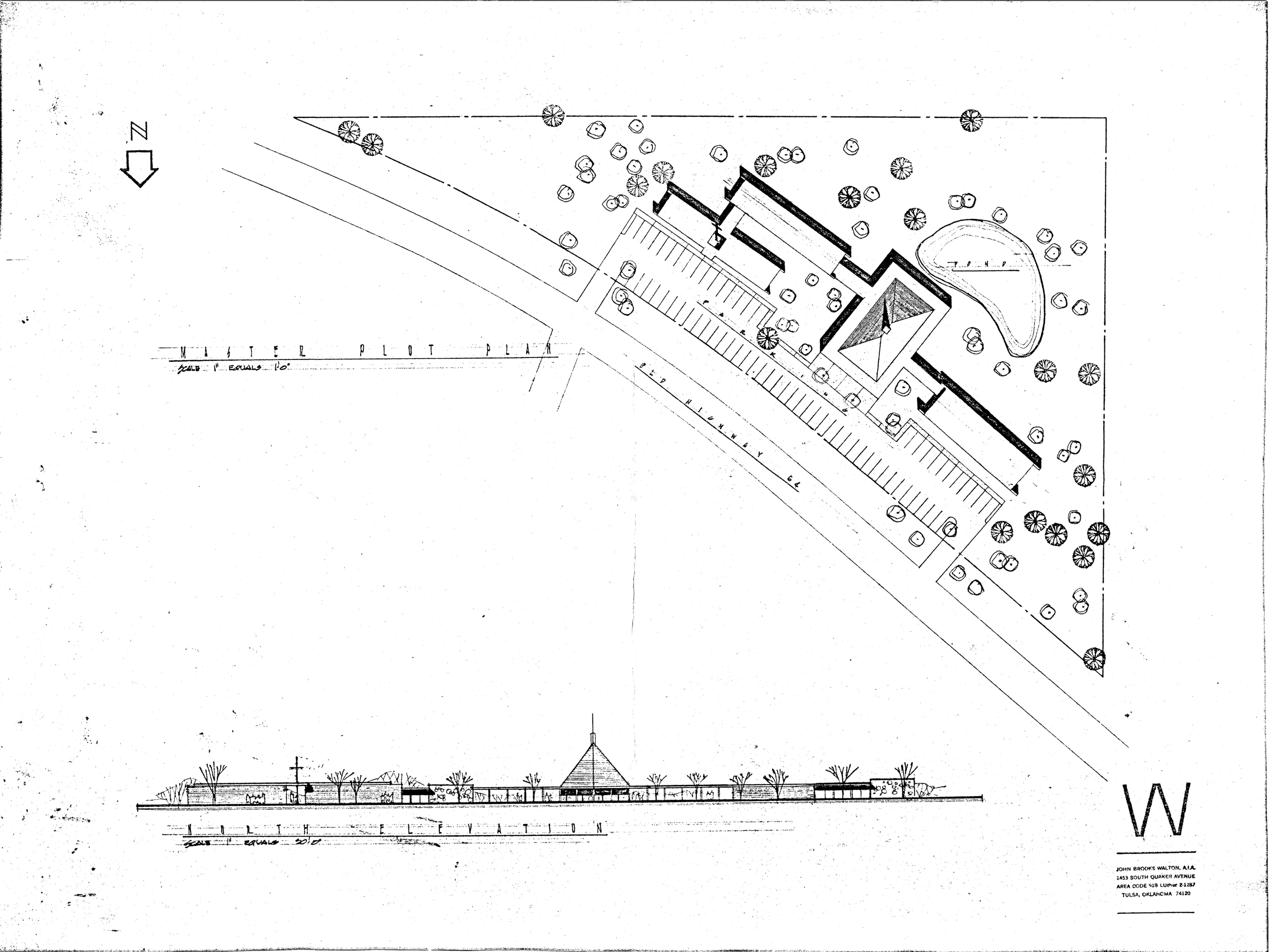
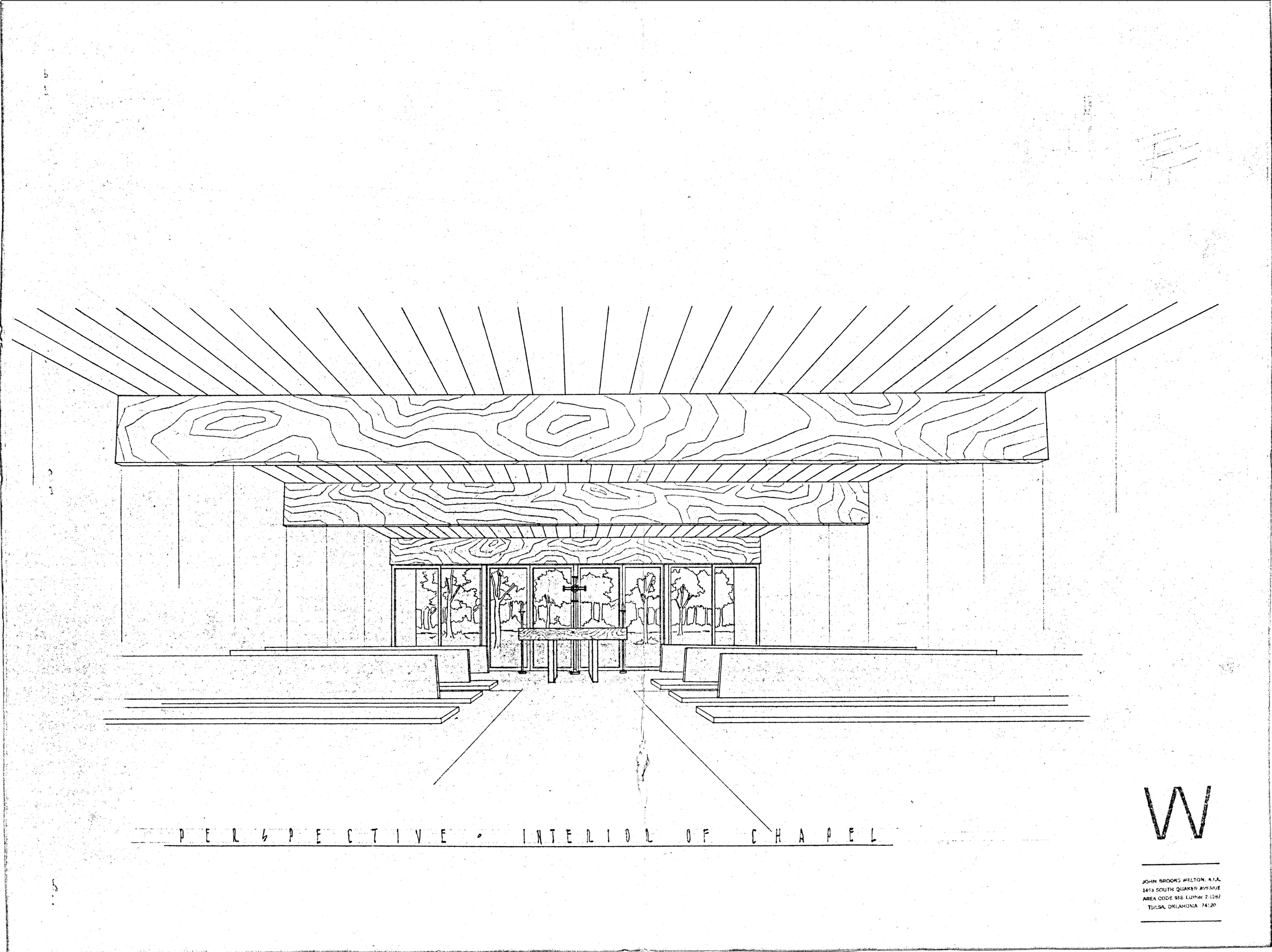
Until the mid-1960s, church services took place in a typical house structure on Cherokee Street in the City of Cleveland. Then, in 1967, the families, under the leadership of Jack Harlon, constructed a church along the road to what we now know as the Westport Marina – about a mile North of the Westport Exit from what is now State Highway 412. The new St. Bede’s, designed by Tulsa architect John Brooks Walton, was dedicated just one week before the equally new Westport Baptist Church was officially opened – just to the north, on the way to the Westport Marina. Four plots of land were designated by the developer for churches, but only the Episcopalians and Baptists used the gift.
At the time of dedication, The Rt. Rev. Chilton Powell was the Bishop of Oklahoma. He was represented at the event by The Rt. Rev. Frederick W. Putnam, suffragan bishop of the Oklahoma Episcopal diocese. The Priest in charge was The Rev. Richard Whiteside, chaplain at the Hissom Memorial Center, a major state facility on the west side of Sand Springs.
The development of the lake area, including Westport, didn’t happen as expected. In the early days of St. Bede’s members lived in the Westport area – some were within walking distance of the church. St. Bede’s has always been a small, lay-led church. In time, the original members either died or moved away. Over the years only a few members have lived in the vicinity of the church. In some ways St. Bede’s has become a “destination church” with members living in Tulsa, Sand Springs, Cleveland, Bristow and Mannford.
Because St. Bede’s is a small congregation, the church cannot afford a full-time priest. Instead, a series of “supply priests” (priests who fill in from week to week) have served the church over the years. The length of their tenure has varied as well as their gifts, personalities and perspectives, but they have all been faithful in proclaiming the Gospel of Christ, providing the sacraments and encouraging the outreach ministries of the church. In January of 2021, the Bishop Poulson Reed assigned Fr. Lee Stephens as our first Vicar to serve St. Bede’s as a regular part-time priest.
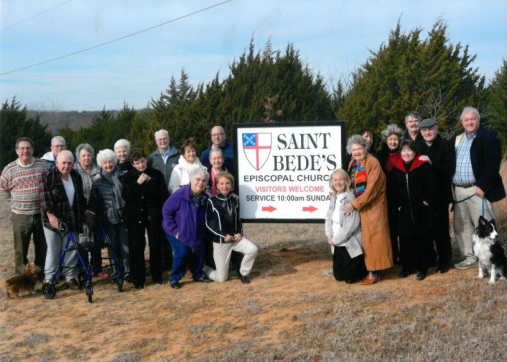
A group photo of St. Bede’s from 2016.
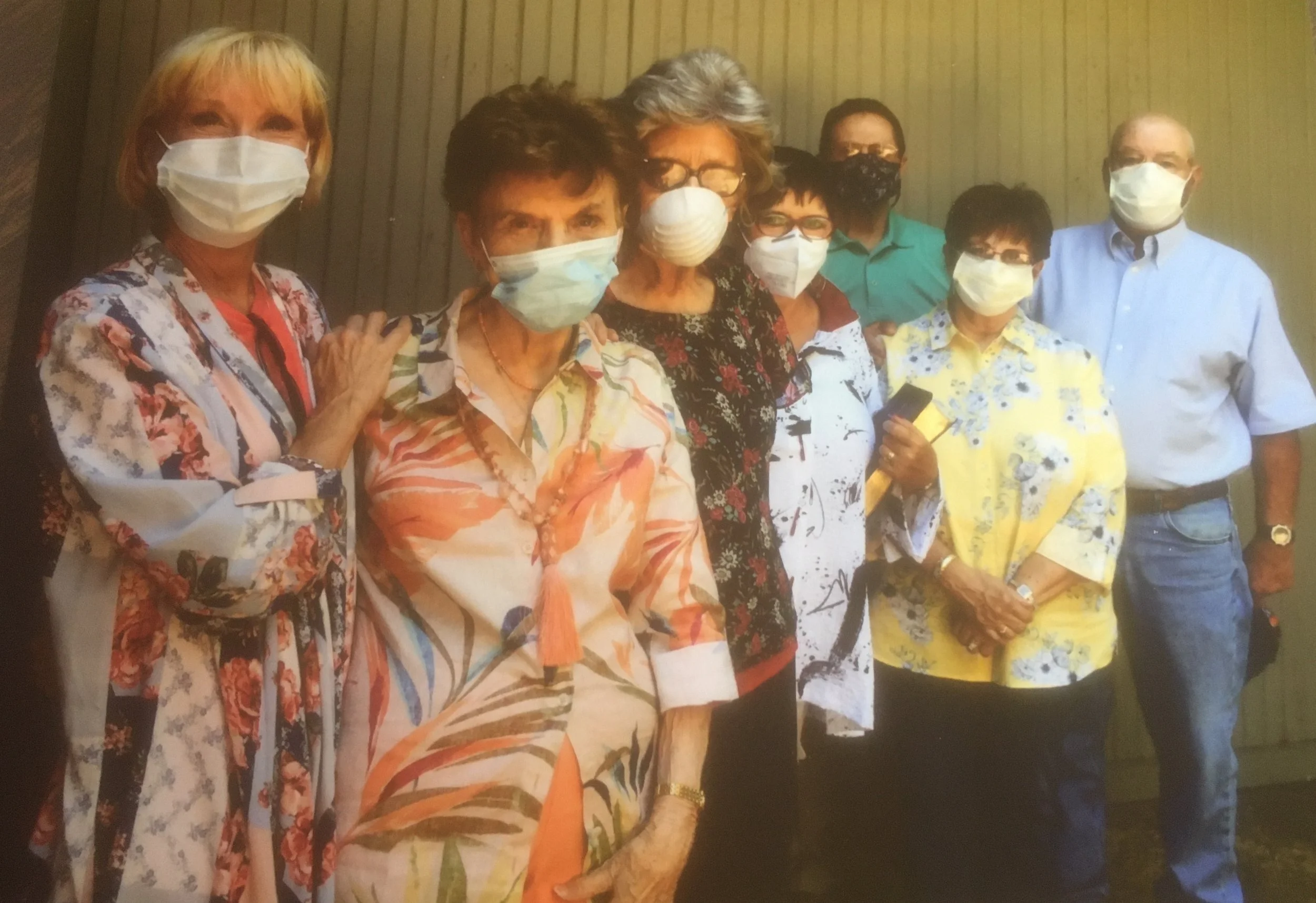
Being able to get vaccinated and masked up allowed us to re-open during the pandemic and keep community members safe in 2021.
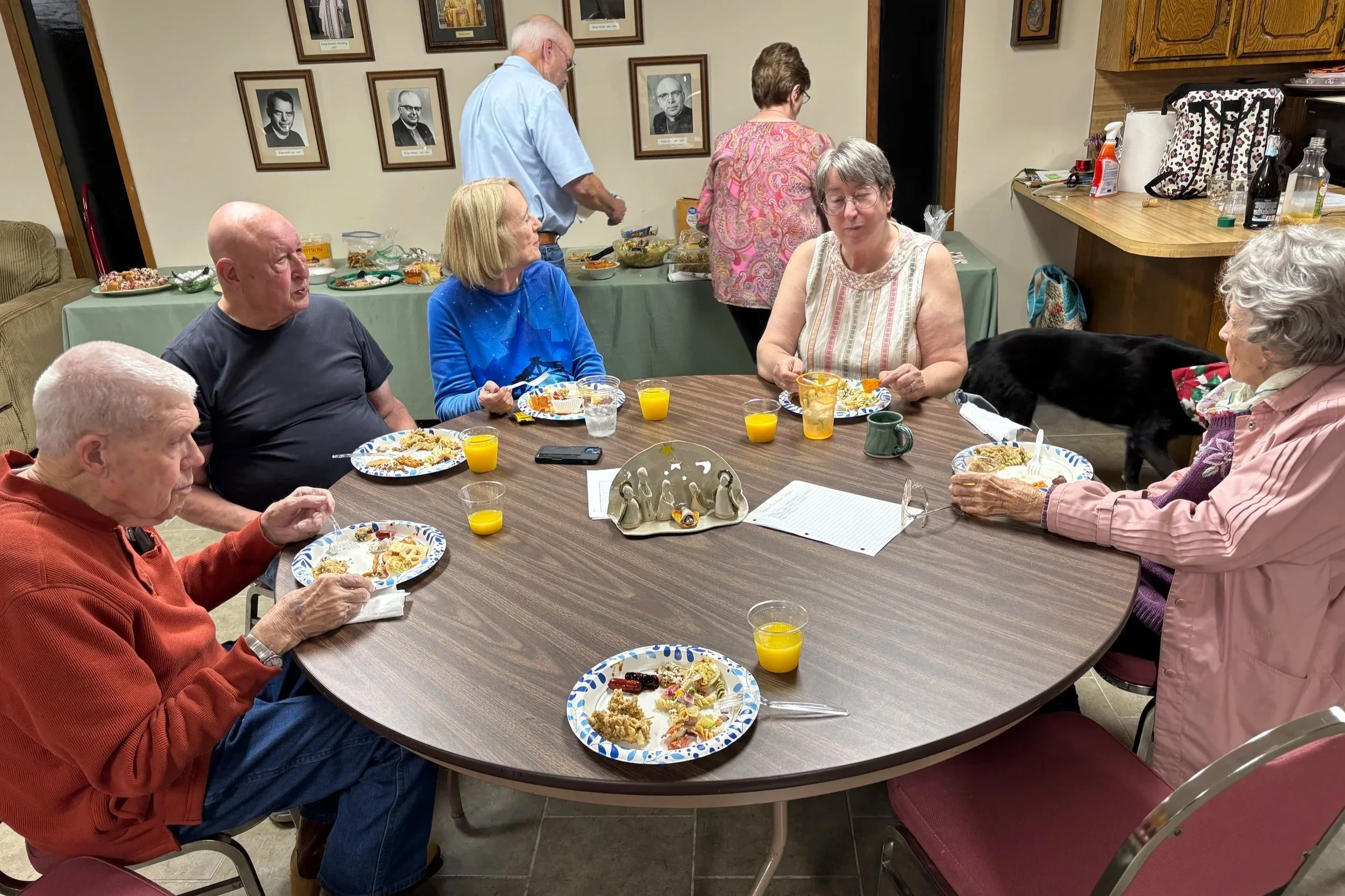
The 2025 Christmas service reception. Today, St. Bede’s is a small but vibrant and active community where all are welcome.
Architecture Archives