
The Episcopal Tradition
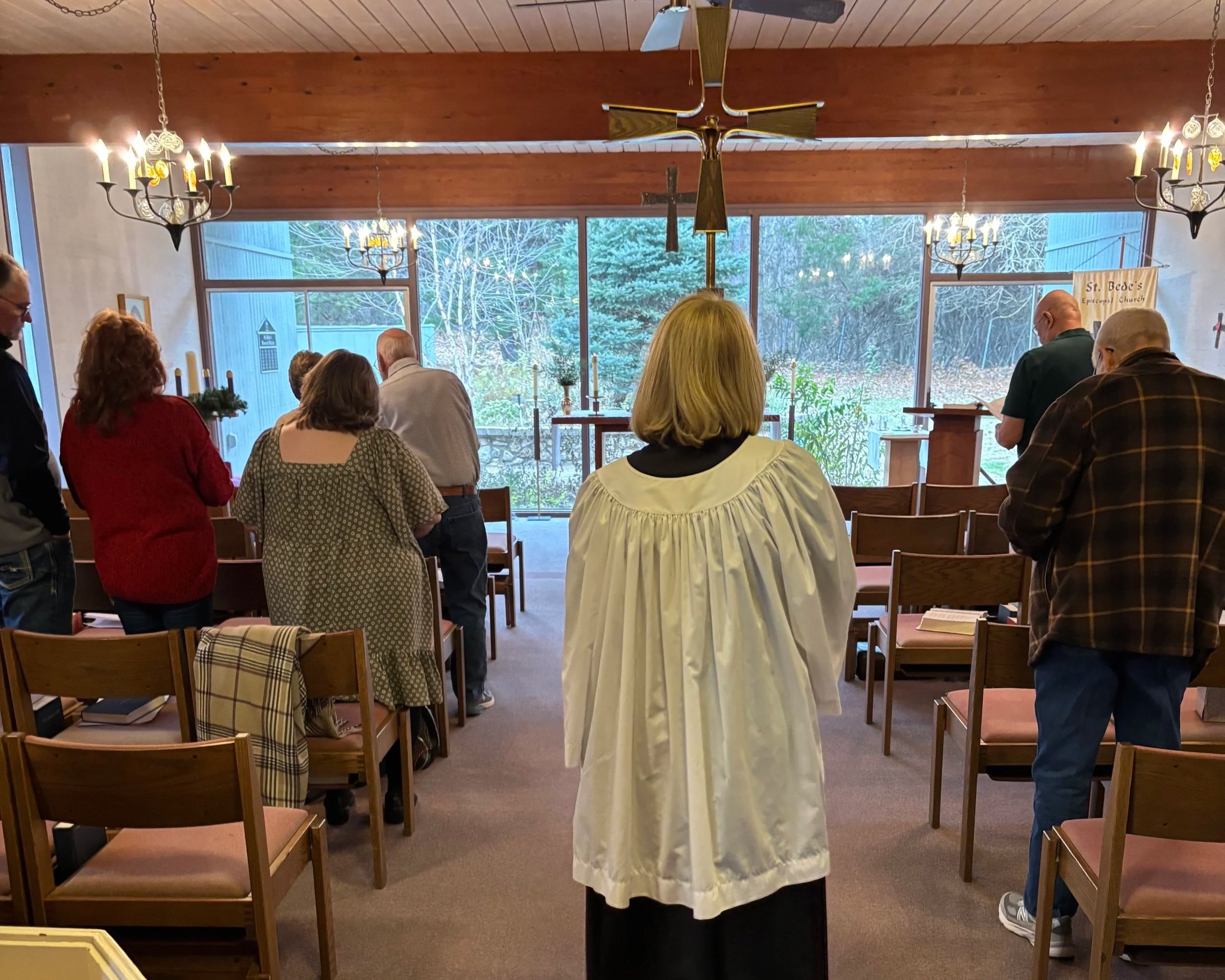
As Episcopalians…
Here is a brief summary of important beliefs and attitudes we have here at St. Bede’s and share with the wider Episcopal Church:
As Episcopalians, we follow Jesus Christ our Lord, and we believe in the Holy Trinity: Father, Son, and Holy Spirit.
We strive to love our neighbors as ourselves and to respect the dignity of every human being.
We are part of the worldwide Anglican Communion and trace our heritage to the beginnings of Christianity.
Our liturgy (worship) retains the ancient structure and traditions of the Church and is celebrated in many languages. Our worship is guided by the Episcopal prayer book, the Book of Common Prayer.
We ordain men and women, including those who are married, as deacons, priests and bishops.
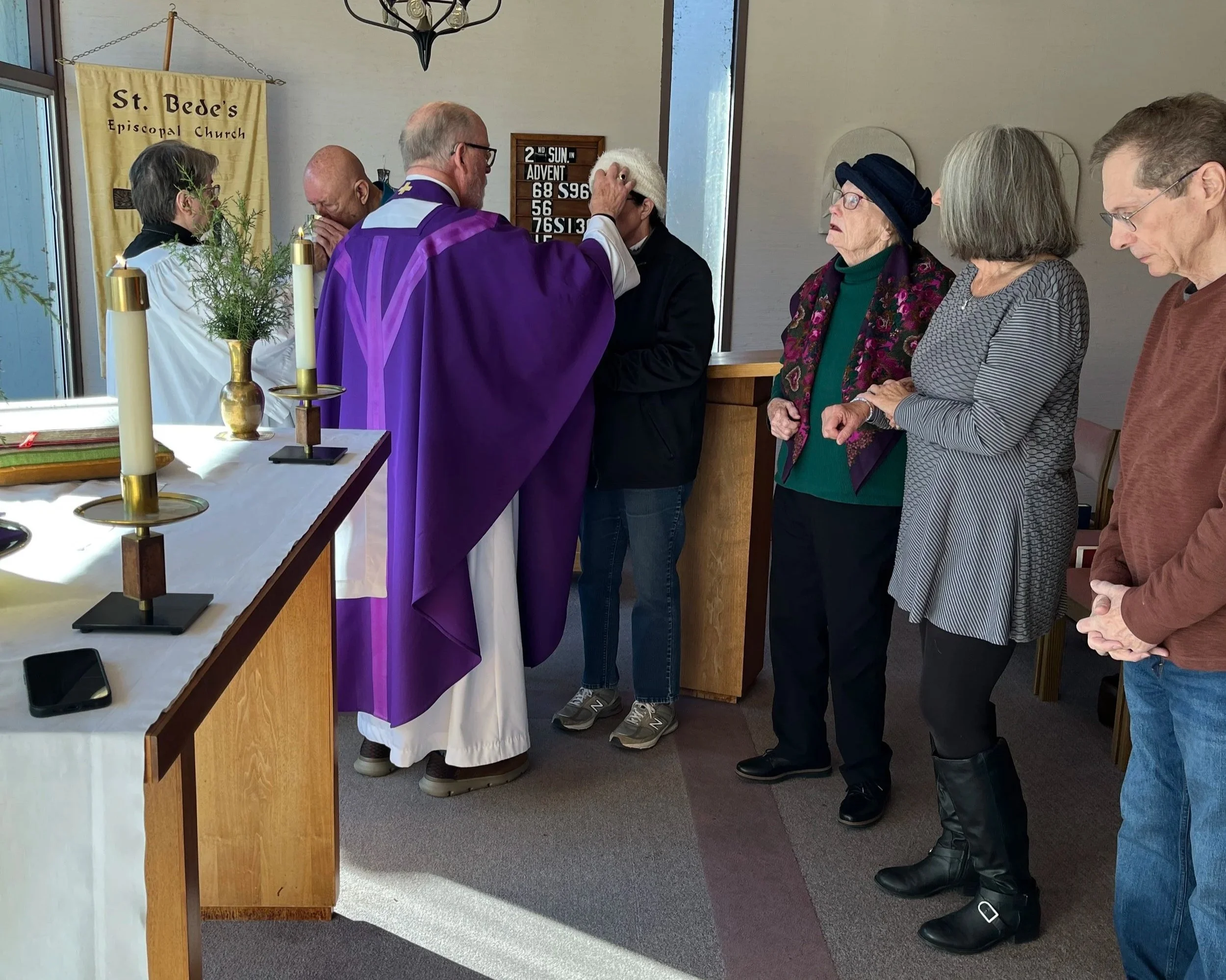
The Holy Eucharist (Holy Communion), the breaking of bread and sharing of the cup, is celebrated most Sundays and feast days, and it is vital to our faith and worship. Communion may be received by all baptized Christians regardless of church membership or denomination.
We uphold the importance of the Bible but are not literalists. Our interpretation of scripture is guided by knowledge and the Holy Spirit.
We do not believe you have to check your brain at the door. The questions by seekers are welcome as we explore what it means to follow in the way of Jesus Christ.
We recognize that there is grace after divorce and people who have experienced divorce are fully welcome in the church.
We affirm that issues such as birth control are matters of personal, informed conscience.
We celebrate our unity in Christ while honoring our differences, always putting the work of love before uniformity of opinion.
All persons, regardless of age, race, gender, marital status, sexual orientation, ethnicity, socioeconomic position, physical disability, or country of origin are welcome to find a spiritual home in the Episcopal Church.
We believe all persons are loved by God. There are no exceptions – including those who have yet to believe.
Our Sacred Texts & Beliefs
-
Holy Scripture, the Bible, is vital to our personal and church life. The scriptures are holy because God inspired writers who wrote about their experiences of faith and salvation during their time throughout history. The scriptures are holy in sharing the birth, life, ministry, sacrifice, resurrection of Jesus the Christ, and the early days of proclaiming and spreading the Good News. The scriptures are also holy as God speaks to us through the Holy Spirit as we read, study, meditate and share the biblical text. Attention is given to the context of the writings aa well as the context in which we live. The lectionary (assigned readings for worship) of the church provides the selection of scripture for each week in a three-year cycle. On a typical Sunday scriptures from the Old Testament, Psalms, Epistles and Gospel are used in the liturgy for the Holy Eucharist.
-
The Book of Common Prayer (BCP) is a framework and guide for our personal and congregational spiritual life. This is especially true in planning and experiencing the celebration of the Holy Eucharist (Holy Communion) which is central to our parish life. The BCP also guides the church in experiencing the sacraments and feast days of the liturgical calendar. Approximately seventy percent of the prayer book is comprised of Holy Scripture and has a wide variety of ancient prayers which are still relevant today. The first English Prayer Book was published in 1549 and is now used in revised forms and different languages around the world. Our current prayer book was revised in 1979 and serves us well. The combined use of the BCP and Holy Scripture provides a setting for enriching our relationship with God and each other.
-
The Baptismal Covenantis a wonderful expression of our faith and our vows to follow in the way of Jesus Christ. The first three questions use the Apostles’ Creed to affirm our belief in the triune God – Father, Son and Holy Spirit. The following five questions are descriptive ways in broad terms if what it means to be a Christ-person. Everyone is invited to provide the specificity of what that looks like in his or her personal life. The Baptismal Covenant is used in the liturgy for Baptism (child or adult) and Confirmation. This is also included in the celebration of the Great Easter Vigil, The Baptism of Jesus, Pentecost and All Saints Sunday (The Book of Common Prayer, pg. 304).
Celebrant: Do you believe in God the Father?
People: I believe in God, Father almighty, creator of heaven and earth.
Celebrant: Do you believe in Jesus Christ, the Son of God?
People: I believe in Jesus Christ, his only Son, our Lord. He was conceived by the power of the holy Spirit and born of the Virgin Mary. He suffered under Pontius Pilate, was crucified, died and was buried. He descended to the dead. On the third day he rose again. He ascended into heaven and is seated at the right hand of the Father. He will come again to judge the living and the dead.
Celebrant: Do you believe in God the Holy Spirit?
People: I believe in the Holy Spiri, the holy catholic Church, the communion of saints, the forgiveness of sins, the resurrection of the body, and the life everlasting.
Celebrant: Will you continue in the apostles’ teaching and fellowship, in the breaking of bread, and in the prayers?
People: I will, with God’s help.
Celebrant: Will you persevere in resisting evil, and, whenever you fall into sin, repent and return to the Lord?
People: I will, with God’s help.
Celebrant: Will you proclaim by word and example the Good News of God in Christ?
People: I will, with God’s help.?
Celebrant: Will you seek and serve Christ in all persons, loving your neighbor as yourself?
People: I will, with God’s help.
Celebrant: Will you strive for justice and peace among all people, and respect the dignity of every human being?
People:I will, with God’s help.
-
The Apostles’ Creed is the oldest formal statement of faith in the Christian Community. This creed was written in the late second century and reflects the core beliefs of Christianity. We use the Apostles’ Creed primarily with the Daily Offices (daily prayers) of Morning and Evening Prayer (The Book of Common Prayer, pg. 96 & 120).
I believe in God, the Father almighty,
creator of heaven and earth;
I believe in Jesus Christ, his only Son, our Lord.
He was conceived by the power of the Holy Spirit
and born of the Virgin Mary.
He suffered under Pontius Pilate,
was crucified, died, and was buried.
He descended to the dead.
On the third day he rose again.
He ascended into heaven,
and is seated at the right hand of the Father.
He will come again to judge the living and the dead.
I believe in the Holy Spirit,
the holy catholic Church,
the communion of saints,
the forgiveness of sins,
the resurrection of the body,
and the life everlasting. Amen. -
The Nicene Creed, adopted in 325, is another formal statement of faith used by many denominations of the Church. This creed is used in the Episcopal Church with every celebration of the Holy Eucharist and gives everyone the opportunity to affirm their faith in unison with those who are present and those who have shared this faith over the centuries (The Book of Common Prayer, pg. 358).
We believe in one God,
the Father, the Almighty,
maker of heaven and earth,
of all that is, seen and unseen.We believe in one Lord, Jesus Christ,
the only Son of God,
eternally begotten of the Father,
God from God, Light from Light,
true God from true God,
begotten, not made,
of one Being with the Father.
Through him all things were made.
For us and for our salvation
he came down from heaven:
by the power of the Holy Spirit
he became incarnate from the Virgin Mary,
and was made man.
For our sake he was crucified under Pontius Pilate;
he suffered death and was buried.
On the third day he rose again
in accordance with the Scriptures;
he ascended into heaven
and is seated at the right hand of the Father.
He will come again in glory to judge the living and the dead,
and his kingdom will have no end.We believe in the Holy Spirit, the Lord, the giver of life,
who proceeds from the Father and the Son.
With the Father and the Son he is worshiped and glorified.
He has spoken through the Prophets.
We believe in one holy catholic and apostolic Church.
We acknowledge one baptism for the forgiveness of sins.
We look for the resurrection of the dead,
and the life of the world to come. Amen.